Prejudice n.
Etymology: [F. préjudice, L. praejudicium; prae before + judicium judgment. See Prejudicate, Judicial.]
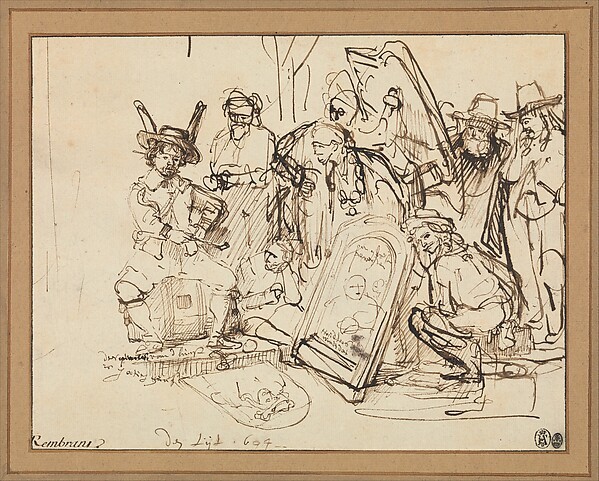
Rembrandt drew a critic judging paintings. Did he look carefully before he decided?
Satire on Art Criticism, Rembrandt (Rembrandt van Rijn), 1644. The Met.1. Foresight. [Obs.] Naught might hinder his quick prejudize. Spenser.
2. An opinion or judgment formed without due examination; prejudgment; a leaning toward one side of a question from other considerations than those belonging to it; an unreasonable predilection for, or objection against, anything; especially, an opinion or leaning adverse to anything, without just grounds, or before sufficient knowledge. Though often misled by prejudice and passion, he was emphatically an honest man. Macaulay.
3. (Law)
A bias on the part of judge, juror, or witness which interferes with fairness of judgment.
2 more senses
4. Mischief; hurt; damage; injury; detriment. Locke. England and France might, through their amity, Breed him some prejudice. Shak.
Syn. -- Prejudgment; prepossession; bias; harm; hurt; damage; detriment; mischief; disadvantage.
1 other Webster entry under this spelling
Prejudice, v. t. [imp. & p. p. Prejudiced; p. pr. & vb. n. Prejudicing.]
1. To cause to have prejudice; to prepossess with opinions formed without due knowledge or examination; to bias the mind of, by hasty and incorrect notions; to give an unreasonable bent to, as to one side or the other of a cause; as, to prejudice a critic or a juryman. Suffer not any beloved study to prejudice your mind so far as to despise all other learning. I. Watts
2. To obstruct or injure by prejudices, or by previous bias of the mind; hence, generally, to hurt; to damage; to injure; to impair; as, to prejudice a good cause. Seek how may prejudice the foe. Shak
Shades of meaning
A presumption (literally, a taking beforehand) is a partial decision formed in advance of argument or evidence, usually grounded on some general principle, and always held subject to revision upon fuller information. A prejudice or prepossession is grounded often on feeling, fancy, associations, etc. A prejudice against foreigners is very common in retired communities. There is always a presumption in favor of what exists, so that the burden of proof is upon one who advocates a change. A prepossession is always favorable, a prejudice always unfavorable, unless the contrary is expressly stated. Compare injury.
Prepositions
Against; rarely, in favor of, in one's favor.