Injury, n.; pl. Injuries.
Etymology: [OE. injurie, L. injuria, fr. injurius injurious, wrongful, unjust; pref. in- not + jus,juris, right,law,justice: cf. F. injure. See Just, a.]
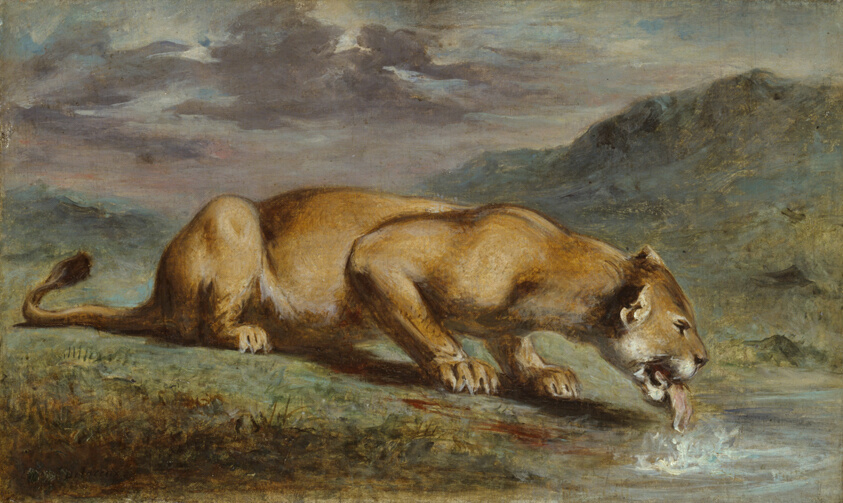
The lioness drinks though she is hurt — see how she holds herself low.
Wounded Lioness, Pierre Andrieu, c. 1850. Art Institute of Chicago.Any damage or violation of, the person, character, feelings, rights, property, or interests of an individual; that which injures, or occasions wrong, loss, damage, or detriment; harm; hurt; loss; mischief; wrong; evil; as, his health was impaired by a severe injury; slander is an injury to the character. For he that doeth injury shall receve that he did evil. Wyclif(Col. iii. 25). Many times we do injury to a cause by dwelling on trifling arguments. I. Watts. Riot ascends above their loftiest towers, And injury and outrage. Milton.
Note: Injury in morals and jurisprudence is the intentional doing of wrong. Fleming.
Syn. -- Harm; hurt; damage; loss; impairment; detriment; wrong; evil; injustice.
Shades of meaning
Injury (L. in, not, and jus, juris, right, law) signifies primarily something done contrary to law or right; hence, something contrary to some standard of right or good; whatever reduces the value, utility, beauty, or desirableness of anything is an injury to that thing; of persons, whatever is so done as to operate adversely to one in his person, rights, property, or reputation is an injury; the word is especially used of whatever mars the integrity of the body or causes pain; as, when rescued from the wreck his injuries were found to be very slight. Injury is the general term including all the rest. Damage (L. damnum, loss) is that which occasions loss to the possessor; hence, any impairment of value, often with the suggestion of fault on the part of the one causing it; damage reduces value, utility, or beauty; detriment (L. deterere, to rub or wear away) is similar in meaning, but far milder. Detriment may affect value only; damage always affects real worth or utility; as a rule, the slightest use of an article by a purchaser operates to its detriment if again offered for sale, tho the article may have received not the slightest damage. Damage is partial; loss is properly absolute as far as it is predicated at all; the loss of a ship implies that it is gone beyond recovery; the loss of the rudder is a damage to the ship; but since the loss of a part still leaves a part, we may speak of a partial or a total loss. Evil commonly suggests suffering or sin, or both; as, the evils of poverty, the social evil. Harm is closely synonymous with injury; it may apply to body, mind, or estate, but always affects real worth, while injury may concern only estimated value. A hurt is an injury that causes pain, physical or mental; a slight hurt may be no real harm. Mischief is disarrangement, trouble, or harm usually caused by some voluntary agent, with or without injurious intent; a child's thoughtless sport may do great mischief; wrong is harm done with evil intent. An outrage combines insult and injury. Compare synonyms for blemish; criminal; injustice.
Prepositions
The injury of the cause; an injury to the structure; injury by fire; by or from collision, interference, etc.