Operation, n.
Etymology: [L. operatio: cf. F. opération.]
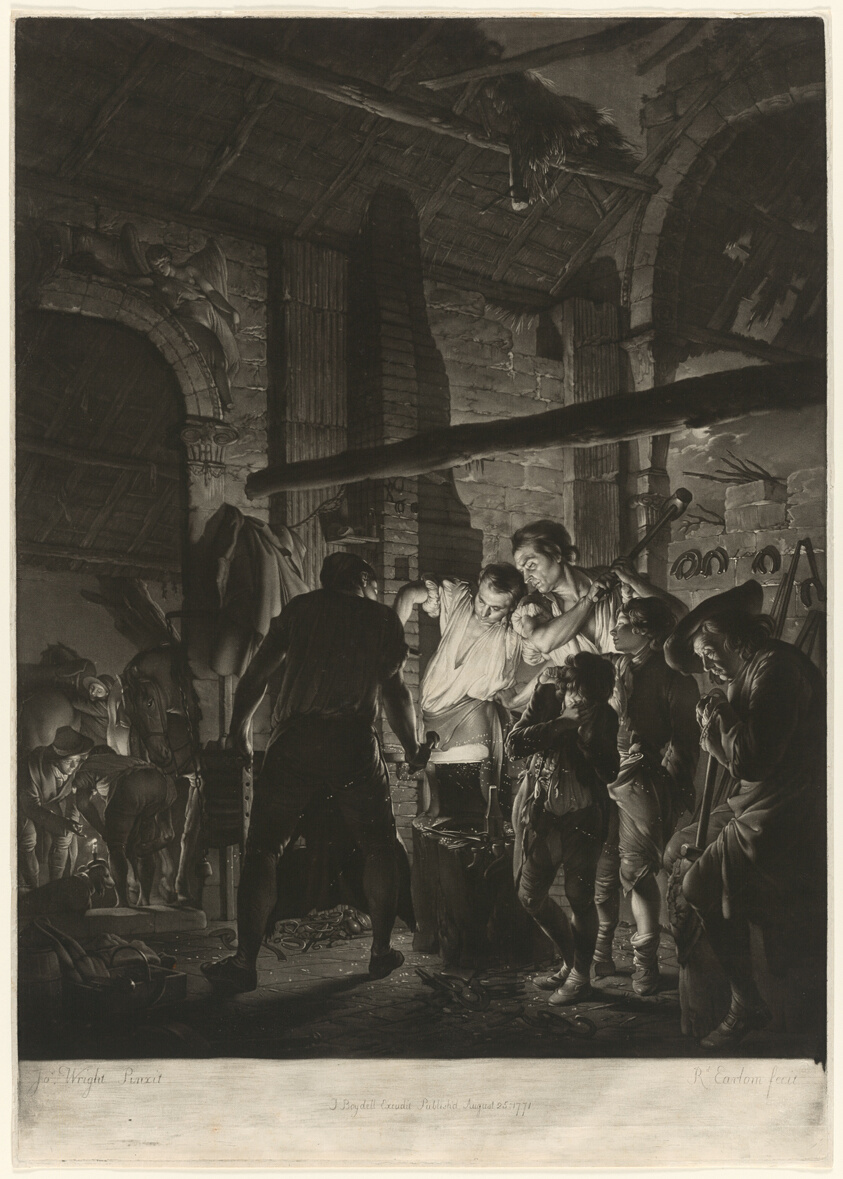
The blacksmiths are at work; the hammer and the fire are in operation.
A Blacksmith's Shop, Richard Earlom, 1771. Art Institute of Chicago.1. The act or process of operating; agency; the exertion of power, physical, mechanical, or moral. The pain and sickness caused by manna are the effects of its operation on the stomach. Locke. Speculative painting, without the assistance of manual operation, can never attain to perfection. Dryden.
2. The method of working; mode of action.
3. That which is operated or accomplished; an effect brought about in accordance with a definite plan; as, military or naval operations.
4. Effect produced; influence. [Obs.] The bards . . . had great operation on the vulgar. Fuller.
4 more senses
5. (Math.)
Something to be done; some transformation to be made upon quantities, the transformation being indicated either by rules or symbols.
6. (Surg.)
Any methodical action of the hand, or of the hand with instruments, on the human body, to produce a curative or remedial effect, as in amputation, etc. Calculus of operations. See under Calculus.
Shades of meaning
Operation is action considered with reference to the thing acted upon, and may apply to the action of an intelligent agent or of a material substance or force; as, the operation of a medicine. Performance and execution denote intelligent action, considered with reference to the actor or to that which he accomplishes; performance accomplishing the will of the actor, execution often the will of another; we speak of the performance of a duty, the execution of a sentence. Compare act.