Mourn, v. t.
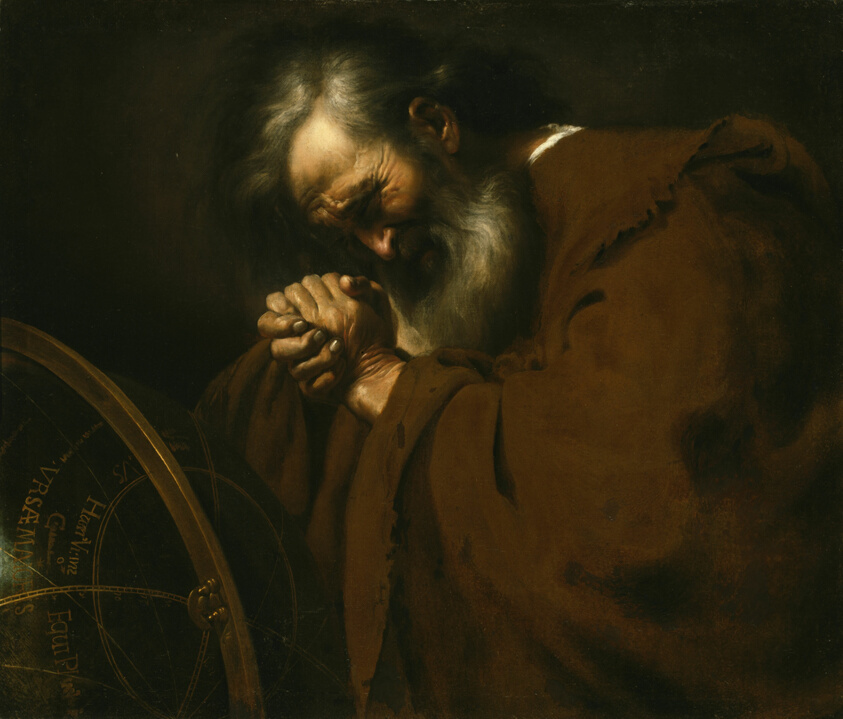
Heraclitus was called the weeping philosopher, because he mourned over the world.
Heraclitus, the Weeping Philosopher, Spanish, c. 1630. Art Institute of Chicago.1. To grieve for; to lament; to deplore; to bemoan; to bewail. As if he mourned his rival's ill success. Addison. And looking over the hills, I mourn The darling who shall not return. Emerson.
2. To utter in a mournful manner or voice. The lovelorn nightingale Nightly to thee her sad song mourneth well. Milton.
Syn. -- See Deplore.
1 other Webster entry under this spelling
Mourn, v. i. [imp. & p. p. Mourned; p. pr. & vb. n. Mourning.]
1. To express or to feel grief or sorrow; to grieve; to be sorrowful; to lament; to be in a state of grief or sadness. Abraham came to mourn for Sarah, and to weep for her. Gen. xxiii. 2.
2. To wear the customary garb of a mourner. We mourn in black; why mourn we not in blood Shak. Grieve for an hour, perhaps, then mourn a year. Pope.
Shades of meaning
To mourn is to feel or express sadness or distress because of some loss, affliction, or misfortune; mourning is thought of as prolonged, grief or regret may be transient. One may grieve or mourn, regret, rue, or sorrow without a sound; he bemoans with suppressed and often inarticulate sounds of grief; he bewails with passionate utterance, whether of inarticulate cries or of spoken words. He laments in plaintive or pathetic words, as the prophet Jeremiah in his "Lamentations." One deplores with settled sorrow which may or may not find relief in words. One is made to rue an act by some misfortune resulting, or by some penalty or vengeance inflicted because of it. One regrets a slight misfortune or a hasty word; he sorrows over the death of a friend.