Hypocrisy, n.; pl. Hypocrisies.
Etymology: [OE. hypocrisie, ypocrisie, OF. hypocrisie, ypocrisie, F. hypocrisie, L. hypocrisis, fr. Gr. Hypo-, and Critic.]
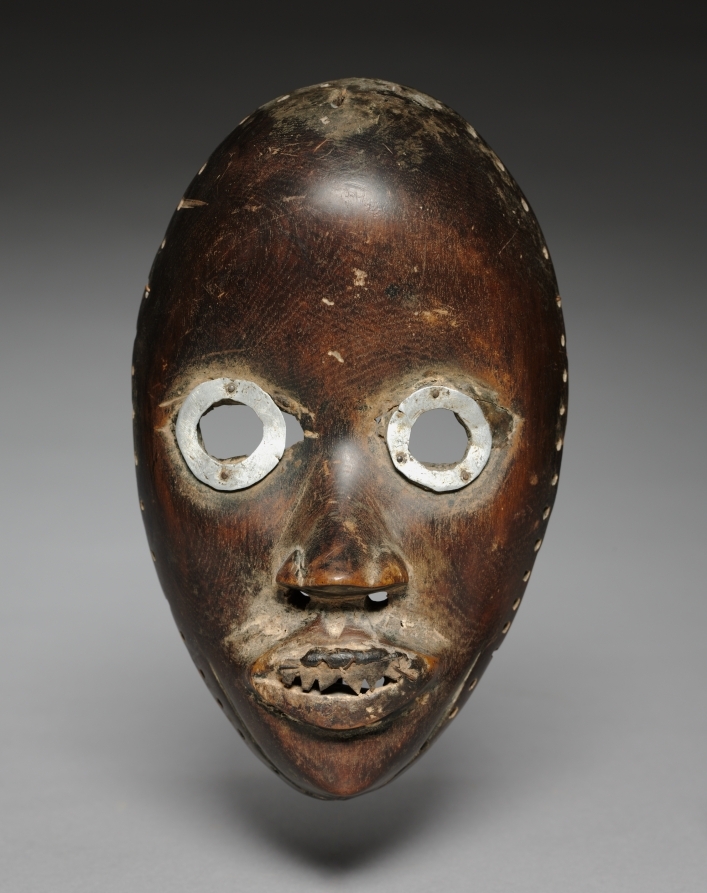
A mask shows a face that is not the real one.
Face Mask, Africa, West Africa, Côte d'Ivoire or Liberia, Dan-style maker, possibly early 1900s. Cleveland Museum of Art.The act or practice of a hypocrite; a feigning to be what one is not, or to feel what one does not feel; a dissimulation, or a concealment of one's real character, disposition, or motives; especially, the assuming of false appearance of virtue or religion; a simulation of goodness. Hypocrisy is the necessary burden of villainy. Rambler. Hypocrisy is the homage vice pays to virtue. La Rochefoucauld (Trans. ).
Shades of meaning
Pretense (L. praetendo) primarily signifies the holding something forward as having certain rights or claims, whether truly or falsely; in the good sense, it is now rarely used except with a negative; as, there can be no pretense that this is due; a false pretense implies the possibility of a true pretense; but, alone and unlimited, pretense commonly signifies the offering of something for what it is not. Hypocrisy is the false pretense of moral excellence, either as a cover for actual wrong, or for the sake of the credit and advantage attaching to virtue. Cant (L. cantus, a song), primarily the singsong iteration of the language of any party, school, or sect, denotes the mechanical and pretentious use of religious phraseology, without corresponding feeling or character; sanctimoniousness is the assumption of a saintly manner without a saintly character. As cant is hypocrisy in utterance, so sanctimoniousness is hypocrisy in appearance, as in looks, tones, etc. Pietism, originally a word of good import, is now chiefly used for an unregulated emotionalism; formalism is an exaggerated devotion to forms, rites, and ceremonies, without corresponding earnestness of heart; sham (identical in origin with shame) is a trick or device that puts one to shame, or that shamefully disappoints expectation or falsifies appearance. Affectation is in matters of intellect, taste, etc., much what hypocrisy is in morals and religion; affectation might be termed petty hypocrisy. Compare deception.