Abase, v.t. [imp.&p.p. Abased; p.pr. & vb. n. Abasing.]
Etymology: [F. abaisser, LL. abassare, abbassare ; ad + bassare, fr. bassus low. See Base, a.]
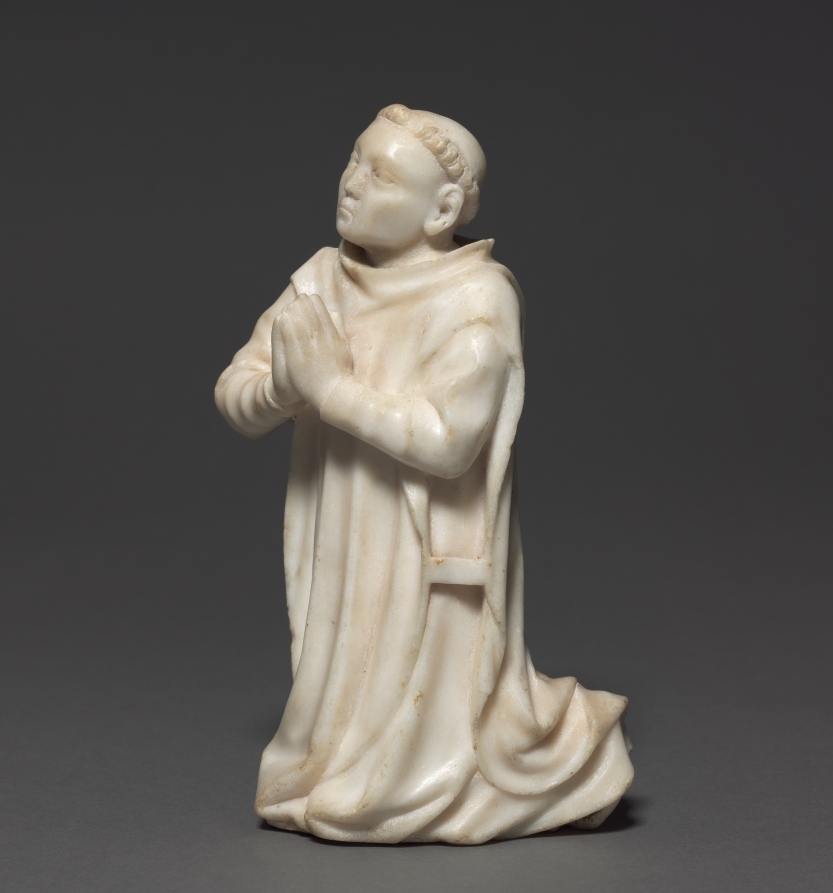
The monk kneels low. To abase yourself is to make yourself low.
Kneeling Carthusian Monk, France, Burgundy, Dijon, c. 1380–1400. Cleveland Museum of Art.1. To lower or depress; to throw or cast down; as, to abase the eye. [Archaic] Bacon. Saying so, he abased his lance. Shelton.
2. To cast down or reduce low or lower, as in rank, office, condition in life, or estimation of worthiness; to depress; to humble; to degrade. Whosoever exalteth himself shall be abased. Luke xiv. ll.
Syn. -- To Abase, Debase, Degrade. These words agree in the idea of bringing down from a higher to a lower state. Abase has reference to a bringing down in condition or feelings; as to abase one's self before God. Debase has reference to the bringing down of a thing in purity, or making it base. It is, therefore, always used in a bad sense, as, to debase the coin of the kingdom, to debase the mind by vicious indulgence, to debase one's style by coarse or vulgar expressions. Degrade has reference to a bringing down from some higher grade or from some standard. Thus, a priest is degraded from the clerical office. When used in a moral sense, it denotes a bringing down in character and just estimation; as, degraded by intemperance, a degrading employment, etc. "Art is degraded when it is regarded only as a trade."
Shades of meaning
Abase refers only to outward conditions. "Exalt him that is low, and abase him that is high." Ezek. xxi, 26. Debase applies to quality or character. The coinage is debased by excess of alloy, the man by vice. Humble in present use refers chiefly to feeling of heart; humiliate to outward conditions; even when one is said to humble himself, he either has or affects to have humility of heart. To disgrace may be to bring or inflict odium upon others, but the word is chiefly and increasingly applied to such moral odium as one by his own acts brings upon himself; the noun disgrace retains more of the passive sense than the verb; he disgraced himself by his conduct; he brought disgrace upon his family. To dishonor a person is to deprive him of honor that should or might be given. To discredit one is to injure his reputation, as for veracity or solvency. A sense of unworthiness humbles; a shameful insult humiliates; imprisonment for crime disgraces. Degrade may refer to either station or character. An officer is degraded by being reduced to the ranks, disgraced by cowardice; vile practises degrade; drunkenness is a degrading vice. Misfortune or injustice may abase the good; nothing but their own ill-doing can debase or disgrace them.